
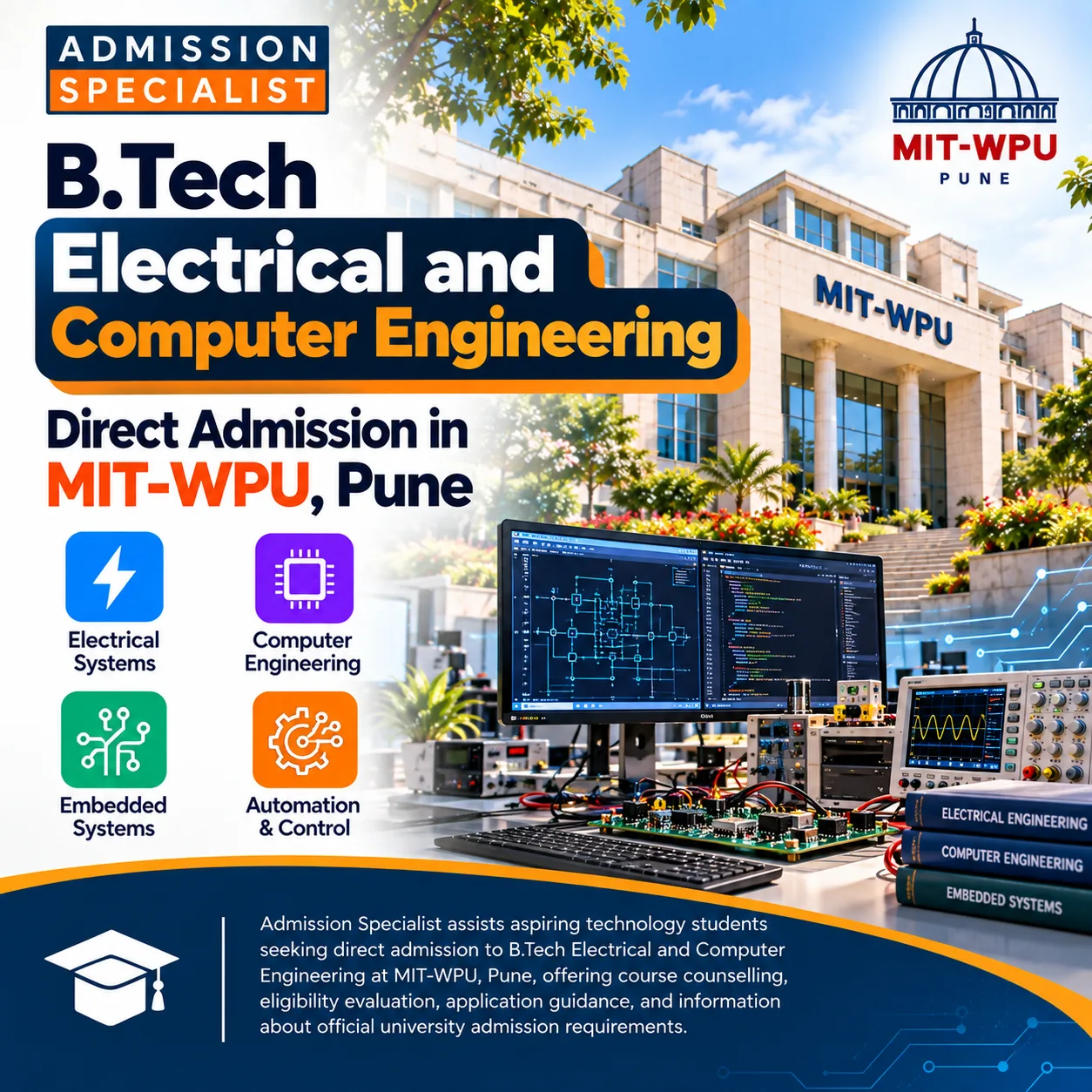
B.Tech Electrical and Computer Engineering Direct Admission in MIT-WPU, Pune
B.Tech Electrical and Computer Engineering Direct Admission in MIT-WPU, Pune
Admission Specialist supports students pursuing direct admission to B.Tech Electrical and Computer Engineering at MIT-WPU, Pune, by explaining programme requirements, reviewing academic eligibility, assisting with applications, and clarifying official admission procedures.
|
Specification |
Details |
|---|---|
| Programme Name | B.Tech Electrical and Computer Engineering |
| Qualification | Bachelor of Technology |
| Academic Level | Undergraduate |
| Duration | 4 Years |
| Learning Format | Full-Time |
| Engineering Disciplines | Electrical Engineering and Computer Engineering |
| Core Subjects | Electrical Circuits, Digital Systems, Computer Architecture, Control Systems |
| Computing Topics | Embedded Computing, Microprocessors, Programming Fundamentals |
| Electrical Topics | Power Systems, Electrical Machines, Electronics |
| Practical Components | Circuit Experiments, Hardware Projects, System Design |
| Eligibility | 10+2 with subjects and marks prescribed by the university |
| Admission Route | As per university admission and selection requirements |
| University | MIT World Peace University (MIT-WPU) |
| Campus | Pune, Maharashtra, India |
| Potential Careers | Electrical Engineer, Hardware Engineer, Embedded Systems Engineer, Control Systems Engineer |
Description
B.Tech Electrical and Computer Engineering Direct Admission in MIT-WPU, Pune
B.Tech Electrical and Computer Engineering at MIT-WPU, Pune, brings together electrical engineering principles and computer-based technologies to help students understand how modern electronic and intelligent systems are designed, controlled, and operated.
Admission Specialist helps aspiring engineers explore direct admission to B.Tech Electrical and Computer Engineering at MIT-WPU, Pune, offering personalised counselling, eligibility guidance, application assistance, and enrolment support.
Key Programme Highlights
-
Electrical Circuit Analysis: Understand voltage, current, circuit behaviour, and the principles behind electrical networks.
-
Computer Architecture: Explore processor design, memory systems, and the internal organisation of computing devices.
-
Digital System Design: Learn how digital logic and electronic components work together to perform computational tasks.
-
Embedded Computing: Discover how specialised computer systems control devices, instruments, and industrial equipment.
-
Electrical Machines: Study the operating principles of motors, generators, and related electrical equipment.
-
Control Engineering: Understand feedback systems and techniques used to regulate the performance of machines and processes.
-
Microprocessor Applications: Explore programmable hardware and its role in electronic and industrial systems.
-
Industrial Automation: Develop foundational knowledge of automated equipment, monitoring systems, and control technologies.
-
Hardware and Software Integration: Understand how programming and electronic hardware combine to create functional engineering solutions.
-
Project-Based Learning: Apply engineering concepts to practical design challenges and system-development activities.
4. Admission Procedure
1. Assess academic eligibility: Review the university’s requirements for Class 12 subjects, minimum qualifying marks, and any accepted equivalent qualifications.
2. Verify entrance examination criteria: Check the entrance tests, scores, and selection rules accepted for the specific programme.
3. Register with the university: Complete the application form and provide the requested educational and personal information.
4. Organise supporting documents: Prepare academic records, identity documents, entrance examination details, and other certificates specified by the university.
5. Follow the selection process: Complete the applicable assessment, verification, and other formalities communicated by the admissions office.
6. Complete enrolment: Once an official offer is issued, fulfil the fee-payment and document-submission requirements within the prescribed period.
Reviews
There are no reviews yet.